

Ask a room of finance leaders what’s stopping them from using AI agents, and you’d expect security to top the list. It didn’t. It came in last.
We surveyed 12 finance leaders during a recent webinar about where their teams stand with AI and what would hold them back from turning on AI agents. It’s a small pulse check, not an industry study, but the answers point to something we’ve already noticed in our conversations with teams: access is only a small barrier for teams. The real issue is trust in what the agent produces.
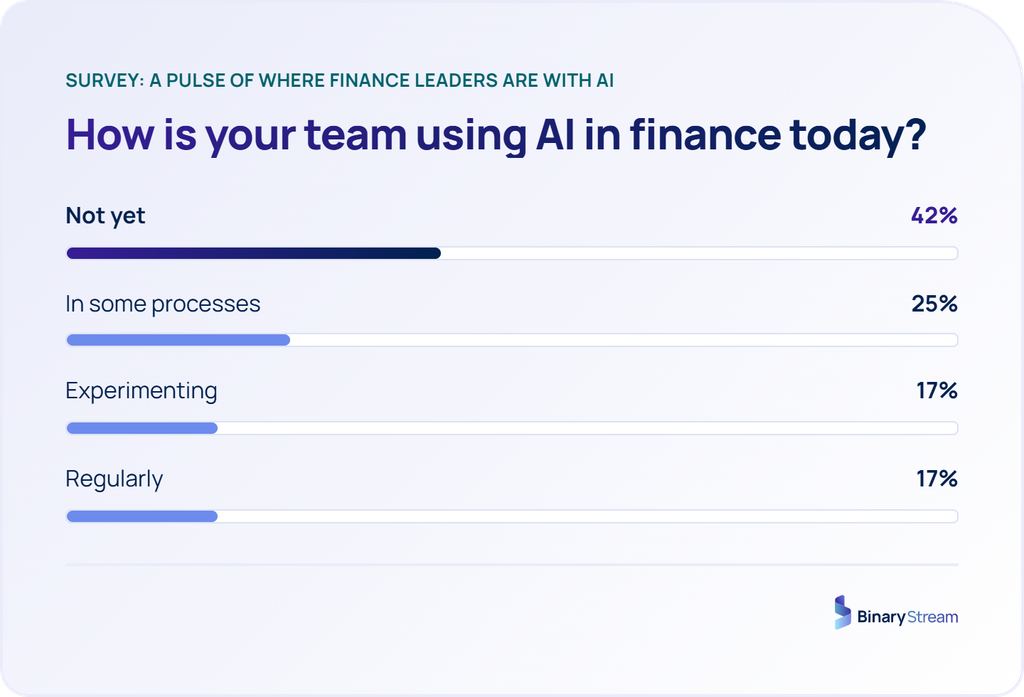
The largest group—42%—isn’t using AI in finance at all yet. Another 25% use it in some processes, 17% are experimenting, and just 17% use it regularly.
If your team hasn’t started, you’re not behind. You’re in the majority.
That said, there is a gap between trying AI and relying on it. Plenty of teams have run a pilot or tested a tool on a single task. Far fewer have made it part of how they close the books, reconcile accounts, or run billing every month. Moving from experiment to everyday use is where most teams stall, and the rest of the survey suggests why.
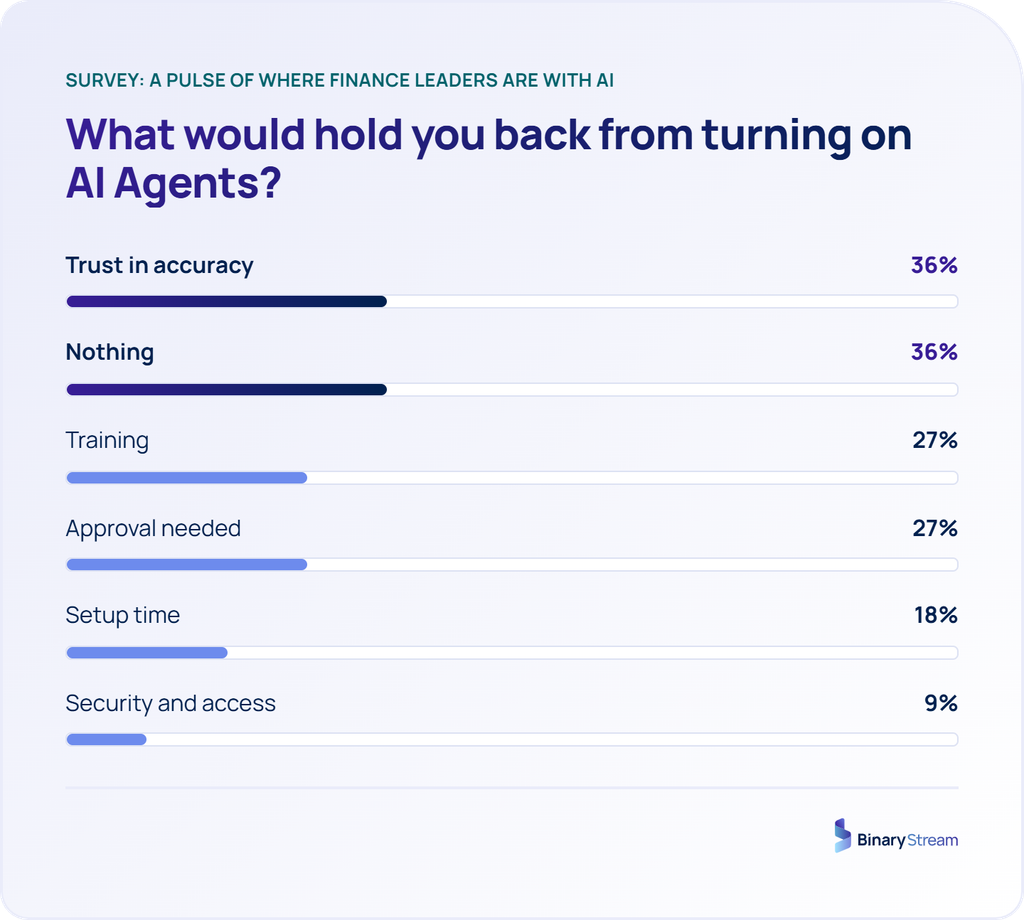
When we asked what would hold them back from turning on AI agents, trust in accuracy came out on top, named by 36% of respondents.
That makes sense for finance. The numbers your team produces flow into the month-end close, audits, board reporting, and tax filings. An agent that’s right most of the time isn’t good enough when one wrong entry can ripple through the ledger. For many finance leaders, the question isn’t whether AI can do the work. It’s whether they can stand behind the result.
But here’s the twist: an equal share (another 36%) said nothing would hold them back. They’re ready to turn agents on today.
So the market isn’t moving as one. It’s split down the middle between teams ready to go and teams that need proof first.
Neither camp is wrong, they’re just starting from different places. Teams that are ready need a clear first use case and a way to measure results. Teams that are cautious need visibility: the ability to see what an agent did, check it, and approve it before anything posts. Both want the same thing in the end; output they can trust.
Only 9% named security and access as a blocker. That put it behind training (27%), approvals (27%), and setup time (18%).
That’s a surprise, given how often security leads the conversation about AI in business. One possible reading: teams already working inside platforms like Microsoft Dynamics 365 trust the security model they have, with established roles, permissions, and audit trails. The hesitation isn’t about who can get in. It’s about what comes out.
It’s a small sample, so treat this as a signal rather than a verdict. But it suggests that leading with security reassurances may miss what finance leaders actually want to hear.
If you’re weighing AI agents for finance, the results point to three practical steps.
Start where accuracy is easiest to check. Pick tasks with clear right answers and low stakes, like matching transactions, flagging exceptions, or drafting routine entries for review. Early wins on verifiable work build the confidence that bigger tasks need.
Keep a human in the loop on approvals. Over a quarter of respondents (27%) cited approvals as a concern. Rather than treating approval steps as a barrier, build them into the workflow. Let the agent prepare the work and your team sign off on it until the results have earned more independence.
Plan for training from day one. Another 27% flagged training. Budget time for your team to learn how the agent works, what it does well, and where to double-check it. People trust tools they understand.
The useful question isn’t whether you’re ahead or behind. It’s which specific, repeatable work in your finance operation is ready to hand to an agent today. Binary Stream’s AI solutions are built for that kind of work, natively inside Dynamics 365:
Each one targets a process that is high-volume, rules-driven, and slow when done by hand. That’s usually where teams see their first measurable return from AI. If you’d like to find out more about how these solutions fit in your present systems, book a call with our experts today.